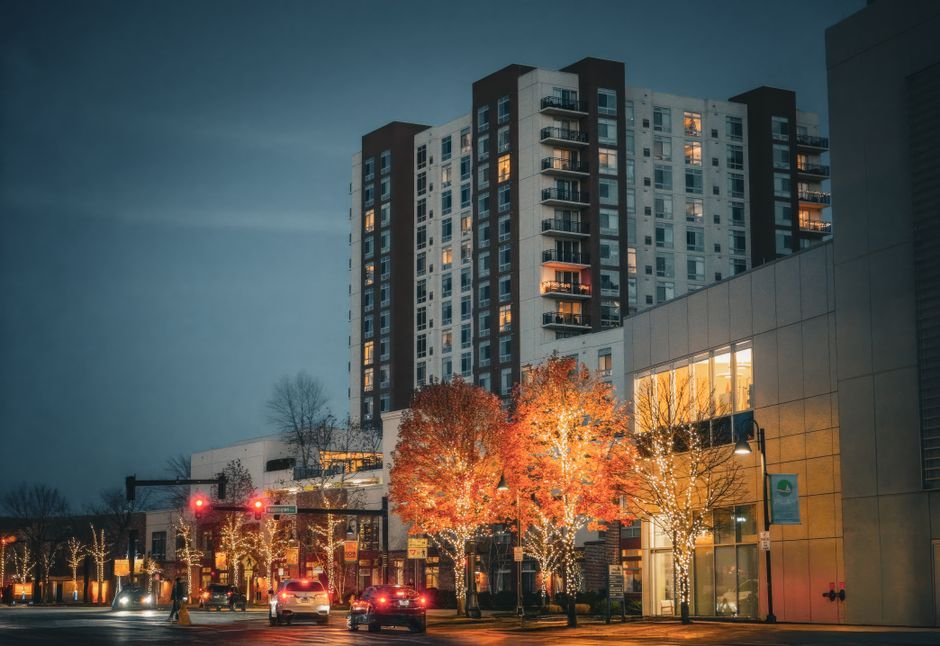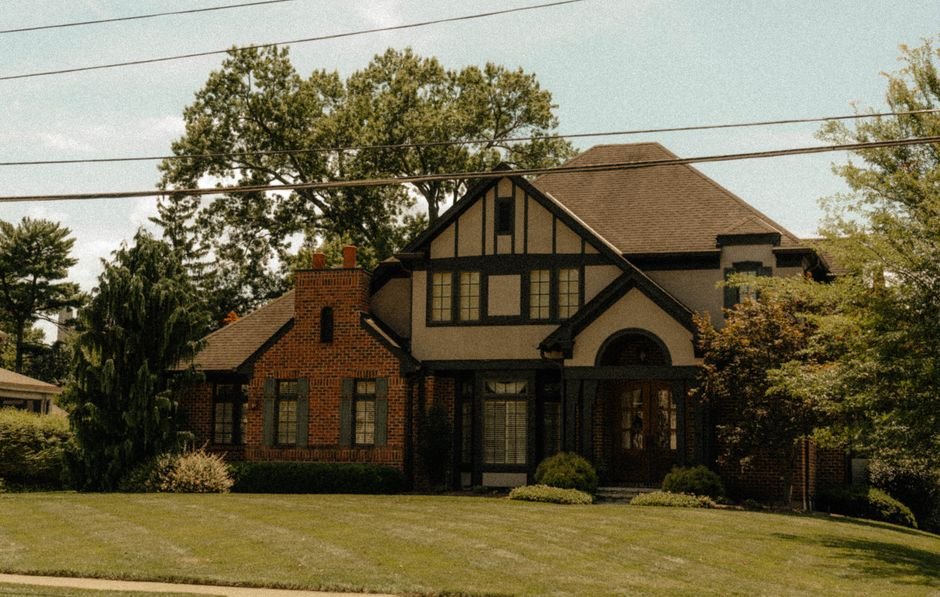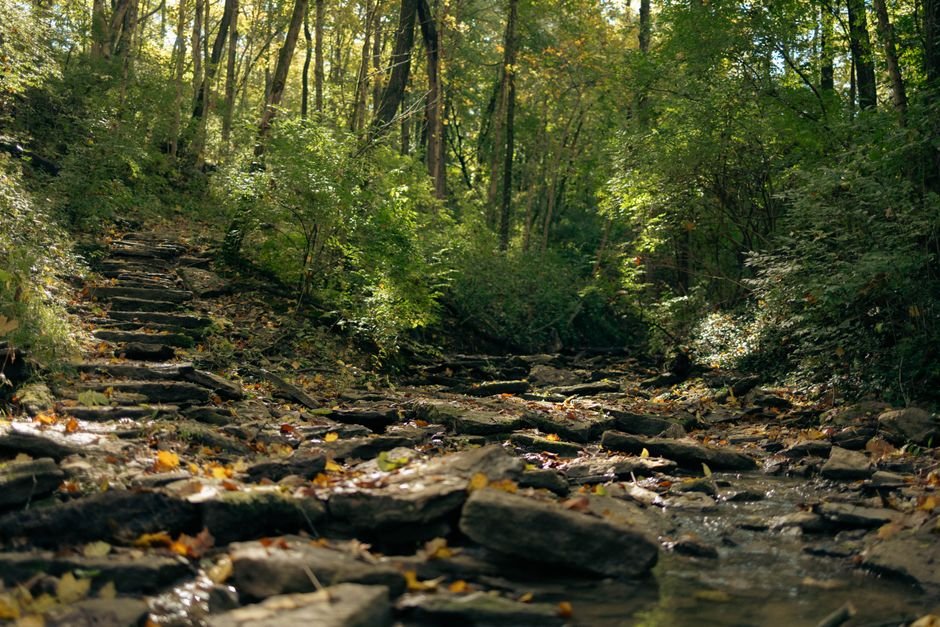
I rolled into Louisville on a Thursday afternoon expecting the usual bourbon-tourism circus. Distillery tours, riverfront walks, maybe a baseball game. The kind of itinerary you find on every travel site. But I've learned that the real Louisville doesn't live on Main Street or inside a gift shop. It lives in the neighborhoods, the overlooked parks, and the kind of places that don't need to advertise because the people who matter already know.
I spent five days here without touching a single official tour. What I found was a city that rewards wandering—tree-lined streets, genuine local spots, and views most visitors never get to see.
Iroquois Park on the South Side
Most people skip south of downtown entirely, which is exactly why Iroquois Park is so good. It's massive—about 700 acres—and it sits on a ridge that actually gives you a reason to climb. The observation tower at the highest point overlooks the entire city and the surrounding landscape in a way that feels genuinely useful, not just photogenic.
I went up on a gray morning and had the tower to myself. On a clear day you can see way out past the urban sprawl. The park itself has decent trails, a lake, an arboretum, and enough space that you don't feel like you're walking in circles around the same three attractions. The grounds are well-kept without being sterile. There's a real neighborhood feel—local people actually use this place to walk their dogs and run, not just tourists checking boxes.
Parking is free, and the place feels genuinely underused by the tourist crowd. If you're looking to get out of downtown and actually move around, this works.
The Speed Art Museum in Old Louisville
I almost missed this one because I was expecting something twee or underfunded. The Speed is neither. It's a genuinely respectable art museum attached to the University of Louisville, free admission, in one of the city's oldest and most interesting neighborhoods.
The collection is solid—Egyptian artifacts, pre-Columbian work, American paintings, photography. Nothing revolutionary, but well-curated and uncrowded. I spent two hours there without feeling rushed. What surprised me was how much the space itself matters. The building has real bones, and the way they've arranged the galleries makes sense. You're not herded through a gift shop at the end like you are at most places.
Old Louisville around it is worth a walk, too. The Victorian mansions are genuinely impressive and the neighborhood has that satisfying quality of being actively lived-in rather than preserved. There are decent restaurants and coffee shops mixed into the residential streets.
Waterfront Park—The Parts Nobody Goes To
Everyone hits the Main Street part of Waterfront Park if they walk the river, but almost nobody actually explores the whole thing. I walked it end to end and found that most of the crowd clumps near the entrance. If you keep going, you get something closer to what a riverfront should feel like.
The northern end, up toward the Big Four Bridge, is where it gets interesting. There's actual green space, fewer crowds, and you can actually see people using it instead of photographing it. The bridge itself is a converted railroad trestle that's now a pedestrian path, and it gives you a completely different perspective on the water and the city behind it. Free, no crowds, and you can see into neighborhoods on the other side.
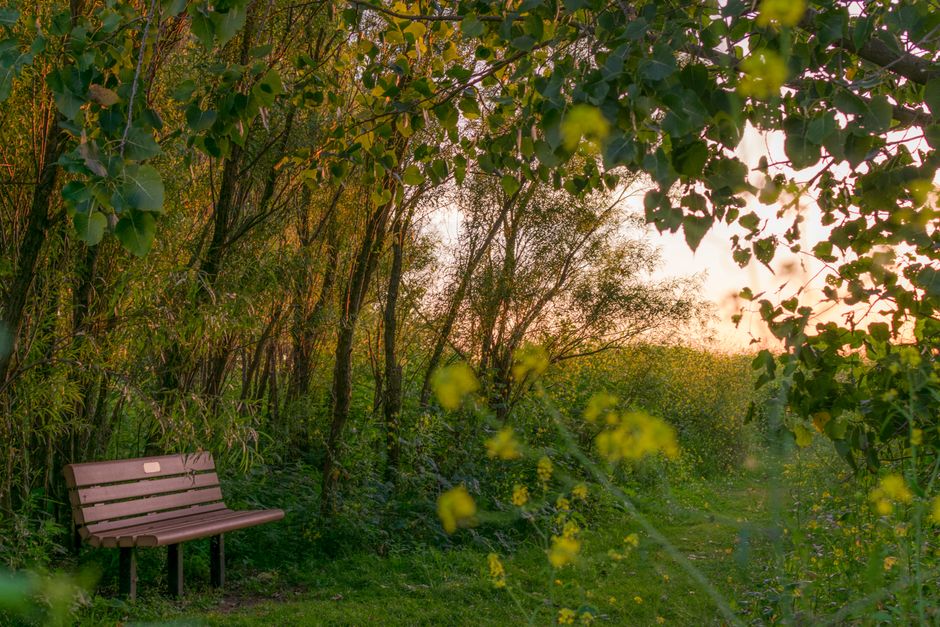
I sat on a bench for thirty minutes watching the water move and the light change. No one bothered me, no one was trying to sell anything, and nobody was filming TikToks. That's becoming rare enough that it's worth mentioning.
The Mellwood Arts Center
This is a repurposed slaughterhouse turned artist collective in the Butchertown neighborhood. It's not exactly secret—locals know it—but it's genuinely off the tourist circuit. The building is massive and a little rough around the edges, which is exactly the point.
It's a working space where actual artists have studios, so what you're seeing isn't a curated exhibition. It's just what people are making. You can walk around most of the building fairly freely, drop into studios, look at work in progress. Some days there are formal events; most of the time it's just people working. I talked to a printmaker for twenty minutes about her process without feeling like I was interrupting.
The neighborhood around it is genuinely transitional in the best way—enough development to have decent coffee and food, enough authenticity that it doesn't feel theme-parked. The whole thing has that feeling of a place that's interesting because it's actually useful to people, not because it's been packaged for visitors.
Douglass Loop and Bardstown Road
I wandered into this neighborhood somewhat by accident, following a street that looked promising, and ended up spending half a day there. Bardstown Road is the main artery, and it's the kind of neighborhood street that still has real character. Coffee shops that actually serve coffee, used bookstores, vintage clothing, restaurants that don't have press kits.
The neighborhood itself—Douglass/Highland—is mixed enough that it feels alive. Young people, longtime residents, families, old houses next to new construction. The kind of place where you see people actually living instead of performing tourism. I had lunch at a random spot, got genuinely good Thai food from someone who wasn't trying to be trendy, and the whole thing cost less than downtown would've charge for a salad.
The retail strip is bikeable, walkable, and you can actually duck in and out of places without following a predetermined route. There's a good used bookstore, several galleries, and the kind of vintage shop where the owner actually cares about what's for sale rather than just moving inventory.
The Frazier History Museum (If You Can Catch It Right)
This is an actual history museum focused on Kentucky and the Ohio River, housed in a restored riverfront building. Most travel sites mention it but never really explain why it's worth your time, which probably explains why it's usually quiet.
The collection is weirdly specific—things like early Kentucky settlement materials, river transportation history, civil war artifacts from a local perspective. If you're interested in how a place actually works, how it got built and sustained itself, this is the real stuff. Not the romanticized version. Not the bourbon industry sanitizing its own history. Just materials and explanations that actually treat visitors like people who can think.
It's not massive, so you won't spend all day, but it's genuinely useful if you want to understand Louisville as something other than a tourism destination. The building itself is nice too—old warehouse converted without losing the warehouse feeling.
Getting Around, Staying Real
I didn't rent a car for this. Louisville's walkable in chunks, and the neighborhoods I found were all accessible by transit or a reasonable walk from downtown. The city isn't impossible to navigate on foot, though you need to be intentional about which directions you go.
The real key is letting yourself get a little lost. Stay out long enough that you stop thinking about what's "supposed" to be interesting. The best parts of any city aren't the parts that are optimized for visitors. They're the parts where people are actually living. Louisville has plenty of those, if you're willing to wander far enough to find them.