More than 2,000 flights delayed or canceled in a single weekend as storms, stretched airline schedules, and FAA bottlenecks collide at the worst possible time for millions of travelers.
- 2,045+ Flights Disrupted
- 135 Cancellations
- 1,910 Delayed Flights
- 7 Major Hubs Hit
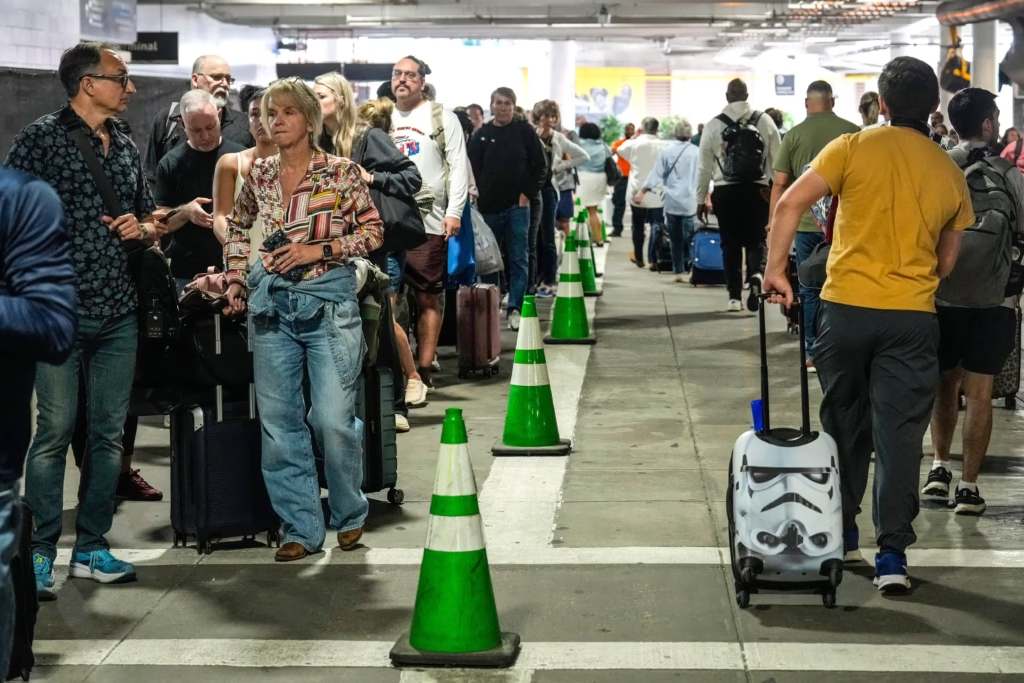
Sunday, April 12 was a bad day to be at an airport. More than 1,900 flights across the United States were delayed and at least 135 were outright canceled, stranding thousands of passengers at gates from Boston to Los Angeles and the ripple effects are still being felt this morning.
The hardest-hit hubs were Atlanta’s Hartsfield-Jackson, Chicago O’Hare, Dallas-Fort Worth, New York’s major trio of airports, Houston, and LAX. Delta, American, United, JetBlue, and Spirit all took serious hits carriers that together move the overwhelming majority of American air travelers every day.
The culprit, as usual, was a confluence of things that should never hit all at once but increasingly do. Severe thunderstorm systems rolling through the Midwest and South forced FAA flow control measures that squeezed arrival and departure windows at multiple hubs simultaneously. Crews hit federal duty-time limits. Planes ended up in the wrong cities. And schedules that airlines had drawn up with zero slack optimized for good weather and on-time everything collapsed under the weight of even modest disruptions.
“When a disruption hits multiple major hubs at once, its effects carry into the days that follow as aircraft, crews, and passengers move through altered schedules.”— Travel Noire, reporting on the weekend’s cascading fallout
Earlier in the month, things were already grinding. The FAA’s own daily air traffic report from April 10 flagged high winds affecting Boston, New York, Denver, Orlando, and Las Vegas all at the same time. On April 5 and 6 alone right after Easter weekend more than 700 cancellations and over 8,600 delays were recorded nationwide, according to industry tracking data. Detroit Metropolitan Wayne County Airport on April 11 saw 116 flights delayed and seven canceled.
Washington Dulles reported 44 delays and 7 cancellations on April 9; by April 12, that number had jumped to 80 delays and 4 cancellations United Airlines bearing the heaviest load. Transatlantic routes to Frankfurt, London, and Munich were caught in the middle of it all.
Industry analysts note this isn’t just a weather problem. Airlines are running summer-level schedules with spring-level margins. Every hub is operating near its operational ceiling. A single grounded Spirit Airlines plane in Miami on April 12 one aircraft triggered more than 50 downstream route delays across the East Coast network. That’s the math of a system with no buffer.
For passengers who don’t follow aviation data and just showed up to catch a flight home for Easter or spring break, the experience was brutal. Overnight airport stays. Missed connections. Rebooking onto flights three days out. Phone batteries dying in gate areas while hold queues stretched to two hours.
The U.S. Department of Transportation’s Airline Customer Service Dashboard shows the major carriers American, Delta, United, Southwest, JetBlue, Spirit are all committed to free rebooking on controllable cancellations. Meal vouchers and hotel accommodations are also on the hook for delays within airline control. But travelers should know: when weather is cited as the cause, those protections can narrow fast.
With summer travel season still two months away, the aviation system’s stress test is already underway. The FAA has implemented flow control at multiple airports this month alone. And if early April is any indication, this isn’t the last time your departure board will go sideways.
Flight Delays & Cancellations — Your Questions Answered
My flight was canceled am I entitled to a refund?
Yes, if the airline cancels your flight or makes a significant change and you don’t accept the alternative offered, U.S. DOT rules entitle you to a full refund. Accepting a rebooked flight generally forfeits that right.
What about hotel and meals if I’m stranded overnight?
Major carriers including Delta, American, United, and Southwest are committed to meal vouchers and hotel accommodations but only when the disruption is within the airline’s control. Weather-caused delays often get classified as “uncontrollable,” which can reduce or eliminate those benefits.
Which airports are highest risk right now?
Based on April patterns, Atlanta, Chicago O’Hare, Dallas-Fort Worth, New York’s three airports, Houston, and LAX have seen the most cascading disruptions. Connecting through any of these during spring storm season adds risk. Book direct where you can.
How do I stay ahead of delays?
Turn on push notifications in your airline’s app, check FlightAware for your inbound aircraft status, and monitor the FAA’s National Airspace System status page at fly.faa.gov. If your inbound plane is running late, you’re probably going to be late too plan accordingly.
You May Also Like
The days are hot, but so are the nights. That’s a problem, experts say
A heat event gripping the Eastern U.S. is keeping nighttime temperatures unusually high, blocking the body's natural cooling window.
◉ Minnesota · 2 months agoEven fans who don’t speak Spanish are watching the World Cup on Telemundo. Here’s why
Fans who don't speak Spanish are choosing Telemundo's World Cup broadcasts for passionate announcers and uninterrupted field coverage during hydration breaks.
◉ California · 2 months agoThe effort to get benefits to American civilians exposed to toxic burn pits
A federal burn pit law covered veterans but excluded thousands of American civilian government workers exposed to the same toxic smoke. Legislation to fix that is now moving.
◉ South Dakota · 2 months ago