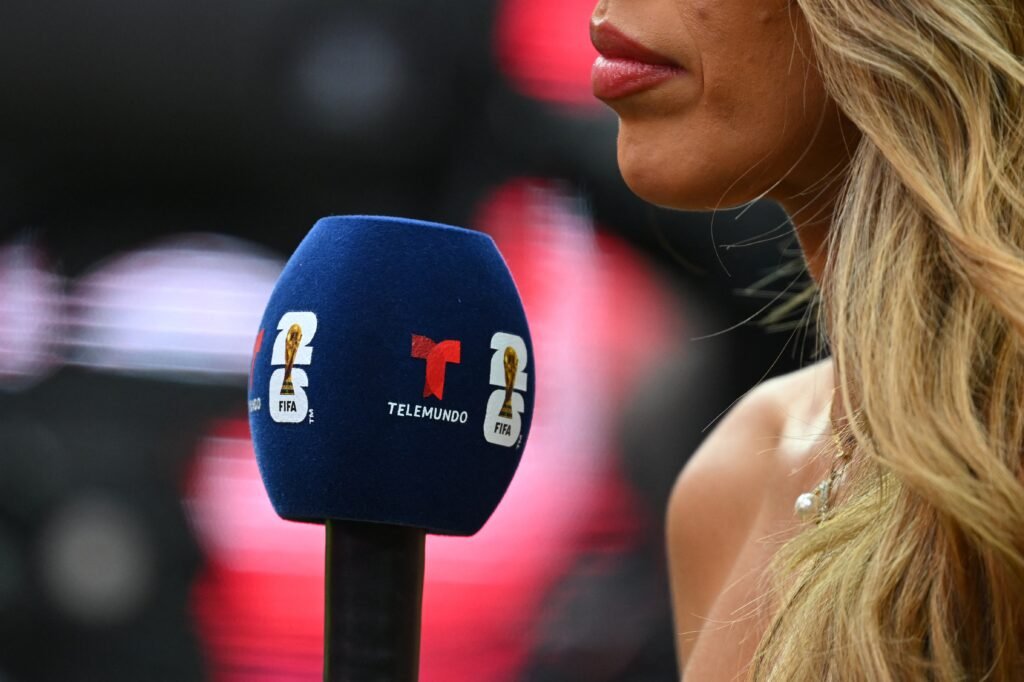
A growing number of English-speaking fans are ditching English-language World Cup broadcasts and switching to Telemundo — even when they don’t understand a word of Spanish.
Two things keep them there. First, the announcers. Telemundo’s commentators match the energy of a goal with full-throated celebration, the kind that makes the hair stand up. English-language broadcasts, fans say, don’t come close. Second, and maybe more practically — when players stop for hydration breaks, Telemundo keeps its cameras on the field. English-language broadcasts cut to commercials.
The hydration break factor
That last point matters more than it might sound. Hydration breaks were introduced to protect players in extreme heat, but for viewers watching English-language coverage, the pauses have meant hard commercial cuts mid-game — sometimes right after a near-miss or a contested call. Telemundo stays with the field. Fans watching at home don’t miss a thing.
The announcer factor is harder to quantify but just as real. World Cup goals on Telemundo come with drawn-out, escalating calls that can last ten seconds or more — the announcer’s voice climbing as the ball moves, then breaking loose the moment it hits the net. Fans who’ve never studied Spanish describe watching those moments and understanding exactly what happened without needing a single word translated.
It isn’t a new phenomenon entirely. Spanish-language soccer coverage in the United States has attracted non-Spanish-speaking viewers for years, largely on the strength of that announcing style. But this World Cup — held across the United States, Canada, and Mexico — has brought the question into sharper focus, with more fans actively choosing Telemundo over available English alternatives and talking about it openly on social media.
Whether the trend pushes English-language broadcasters to rethink their own coverage — the commercial breaks, the announcing register — hasn’t been addressed publicly by any network.