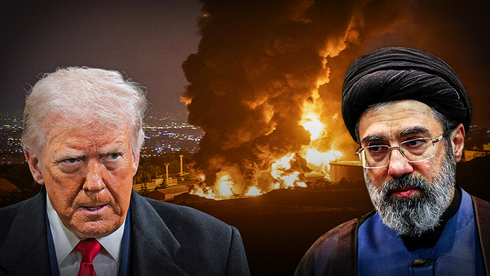
With Trump’s 8 PM deadline bearing down on Tehran, Iran has responded not with surrender but with a defiant 10-point counter-demand, a chilling warning that mirrors Trump’s own language, and a vow to make any escalation “several times greater.”
They heard Trump’s threat. They read every word of it. And then they sent it right back.
As President Donald Trump’s 8 PM Eastern deadline for Iran to reopen the Strait of Hormuz arrives tonight, Tehran has issued its clearest and most chilling answer yet not a white flag, not an agreement, but a direct counter-threat that has rattled capitals from Washington to Riyadh. The war that began 38 days ago is now teetering on the edge of its most dangerous night.
“The Gates of Hell Will Open for You”
When Trump posted his now-infamous Truth Social message threatening to turn Iran into a living hell if the strait stayed shut, Iranian military commanders didn’t flinch. They responded in kind. General Ali Abdollahi Aliabadi of Iran’s Khatam al-Anbiya Central Headquarters the country’s most powerful military command derided Trump’s threats as “helpless, nervous, unbalanced, and reckless,” then issued Iran’s own warning: “The simple meaning of this message is that the gates of hell will open for you.” The Week
It wasn’t bluster from a minor official. It was a calculated, public statement from the commander of the same military that has been trading blows with the United States and Israel for over a month. The message was unmistakable: Iran is not intimidated, and it is prepared to escalate.
Iranian Armed Forces spokesman Ebrahim Zolfaghari went even further on Monday, warning that if attacks on civilian targets continue, Iran’s retaliation will come “on a much wider scale” with losses “several times greater.” CNN
The 10-Point Counter-Demand That Washington Called “Maximalist”
Behind the war of words, Iran did something that surprised observers it actually put terms on paper. Rather than accepting the mediators’ proposed 45-day ceasefire, Iran responded with its own 10-point plan, which a senior US official described bluntly as “maximalist.” ABC News
Iran sent its response through Pakistan its back-channel intermediary outlining demands that include a full end to all conflicts across the region, a safe passage protocol for the Strait of Hormuz, war damage compensation, and the complete lifting of US sanctions. NBC News
Iran’s five core conditions, as relayed through its embassy, boil down to this: an end to all military aggression, concrete guarantees preventing future attacks, full war reparations, a comprehensive end to fighting across all fronts including against allied resistance groups, and formal recognition of Iran’s sovereignty over the Strait of Hormuz. NPR
That last demand is the true non-starter for Washington. Recognizing Iranian sovereignty over one of the world’s most critical oil chokepoints through which 20 percent of global energy supply normally flows would effectively hand Tehran permanent leverage over the global economy. No American president could accept it. No American public would allow it.
Tehran’s Position: No Deal Under the Gun
Iran’s foreign ministry made its negotiating posture crystal clear. Spokesperson Esmaeil Baghaei told reporters that Iran had formulated its positions based on its own interests and communicated them through intermediaries but added that Iran’s demands “should not be interpreted as a sign of compromise, but rather as a reflection of its confidence in defending its positions.” CNBC
He went further, closing the door entirely on the idea of talks conducted under military pressure. “Any diplomatic talks are absolutely incompatible with ultimatums, crimes, and threats to commit war crimes,” Baghaei said, calling Trump’s proposed ceasefire framework “extremely excessive, unusual, and illogical.” CNN
In plain language: Iran is willing to talk but not while a gun is pointed at its head. And as long as US and Israeli bombs keep falling on Tehran, they consider the gun very much pointed.
Iran’s Other Threat: Shutting Down a Second Strait
If Americans thought $4 gas was painful, Iran is now openly threatening to make it worse much worse. A senior adviser to Iran’s newly appointed supreme leader warned that Tehran may direct its Houthi allies in Yemen to target the Bab al-Mandab Strait the chokepoint connecting the Red Sea to the Gulf of Aden through which an estimated 10 percent of all global trade passes. NPR
The adviser put it bluntly: “If the White House contemplates repeating its foolish mistakes, it will quickly realize that the flow of energy and global trade can be disrupted with a single signal.” He added that America “has yet to learn the geography of power.” NPR
If both the Strait of Hormuz and Bab al-Mandab are effectively closed simultaneously, analysts warn that global oil prices could spike past $150 per barrel a level that would trigger recession fears across the Western world and devastate American consumers already stretched thin at the pump.
The Back-Channel Scramble Nobody’s Talking About
Even as the public rhetoric reaches peak intensity, there is a quieter story unfolding in diplomatic backrooms. Pakistan’s army chief, Field Marshal Asim Munir, spent all night in contact with US Vice President JD Vance, special envoy Steve Witkoff, and Iranian Foreign Minister Abbas Araghchi an extraordinary around-the-clock diplomatic push by a country that has positioned itself as the last open line between Washington and Tehran. CNBC
Egypt and Turkey are also involved, with envoys from all three countries having submitted the 45-day ceasefire framework to both sides over the weekend a proposal that would see the strait immediately reopen, with 15 to 20 days to finalize a broader settlement including Iranian commitments on its nuclear program in exchange for sanctions relief and the release of frozen assets. NPR
Trump acknowledged the effort Monday morning, but couldn’t commit. “We are obliterating their country. And I hate to do it, but we’re obliterating and they just don’t want to say ‘uncle,'” Trump told reporters. “And if they don’t, they’ll have no bridges, they’ll have no power plants, they’ll have no anything.” ABC News
He also, for the first time, acknowledged the domestic reality weighing on him. “Unfortunately, the American people would like to see us come home,” he said. ABC News
The Internet Blackout Nobody Is Covering
While governments argue over straits and deadlines, 90 million Iranians are living through something that has received almost no attention in American coverage a total blackout. Iran has kept its citizens offline since the war began on February 28, imposing what has become the longest nationwide internet shutdown on record. Most Iranians cannot receive warnings about where US and Israeli airstrikes will land. They cannot contact family abroad. They cannot access global financial systems. And if they try to get online using Starlink, the Iranian government has made arrests. NPR
Regular Iranian citizens the vast majority of whom have no say in their government’s decisions are navigating a war in near-total information darkness. That human reality rarely makes it into the geopolitical conversations happening in Washington boardrooms or on cable news panels.
What Happens at 8 PM Tonight
The deadline arrives in hours. Three paths remain open.
If Iran makes a meaningful concession even a partial reopening of the strait Trump has political cover to call it a win and delay strikes again. He has done it before, multiple times.
If the back-channel talks produce a breakthrough framework, expect a sudden, dramatic announcement that catches the markets off guard and sends oil prices into a brief free-fall.
And if neither happens if the clock hits zero with the strait still closed and Iran’s counter-demands still on the table the United States faces the most consequential military decision since the war began. Striking Iranian power plants wouldn’t just be an escalation. It would be a fundamental shift in the nature of this conflict, with consequences that no intelligence agency, no think tank, and no White House advisor can fully predict.
The world is watching. Americans are filling up their gas tanks. And in Tehran, the lights are still on for now.
KEY POINTS
- Iran fired back with a threat of its own, warning that “the gates of hell will open” for the US if strikes on energy infrastructure continue — directly mirroring Trump’s own language.
- Iran’s 10-point counter-proposal was called “maximalist” by US officials, demanding full war reparations, sanctions relief, end to all regional conflicts, and formal sovereignty over the Strait of Hormuz.
- Iran threatened to close a second global chokepoint — the Bab al-Mandab Strait — which would strangle another 10% of global trade and potentially push oil past $150 a barrel.
- Pakistan’s army chief pulled an all-nighter on the phones with JD Vance, Steve Witkoff, and Iran’s foreign minister in a last-ditch diplomatic push before tonight’s deadline.
- 90 million Iranians have been cut off from the internet since February 28 in the longest nationwide internet blackout ever recorded — unable to receive airstrike warnings or contact family abroad.