In a rare solo address from the White House, the First Lady made her most forceful public denial yet. But not everyone is convinced it was really about her.
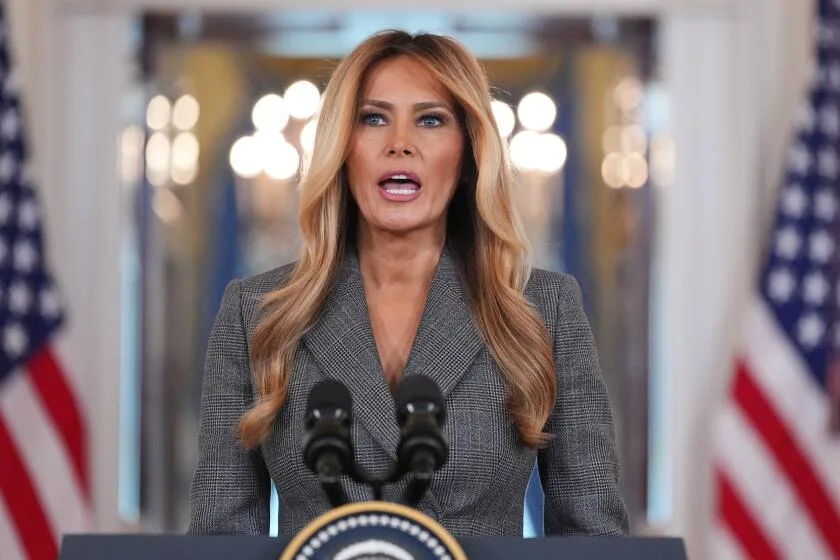
It was the kind of statement that, when it started, left even White House staffers unsure what was coming. On Thursday afternoon, First Lady Melania Trump stepped in front of cameras in the Cross Hall of the White House and delivered an unscripted-feeling, nearly six-minute address categorically denying any meaningful connection to Jeffrey Epstein the deceased sex offender whose social circles once overlapped with some of the most powerful people in America.
Her message was direct: she was not Epstein’s victim, she had never been on his plane, never visited his private island, and her name had never appeared in court documents, victim statements, or FBI interviews related to his crimes. She acknowledged meeting him once in 2000 at an event she attended with Donald Trump, and described a 2002 email she sent to Epstein’s convicted accomplice Ghislaine Maxwell as nothing more than “casual correspondence.” President Trump reportedly told journalists he hadn’t known the statement was coming.
“The lies linking me with the disgraceful Jeffrey Epstein need to end today.” — First Lady Melania Trump, April 9, 2026
The timing is hard to ignore. Just one day earlier, the Department of Justice confirmed that former Attorney General Pam Bondi fired by Trump on April 2 amid growing frustration over her handling of the Epstein files — would not comply with a congressional subpoena to testify before the House Oversight Committee on April 14. Democrats swiftly threatened contempt charges and vowed to pursue her deposition regardless of her employment status.
The statement drew bipartisan praise for Melania’s call for a public congressional hearing focused on Epstein survivors — both Republican Rep. Nancy Mace of South Carolina and Democratic Rep. Robert Garcia of California endorsed the idea within hours. But a group of Epstein survivors responded critically, arguing the statement shifted focus and responsibility onto victims who had already come forward at great personal cost. “Survivors have done their part,” their statement read. “Now it’s time for those in power to do theirs.”
The Epstein saga remains one of the most combustible stories in Washington, one that has survived administrations, news cycles, and congressional investigations without producing a single additional criminal charge beyond Epstein and Maxwell themselves.