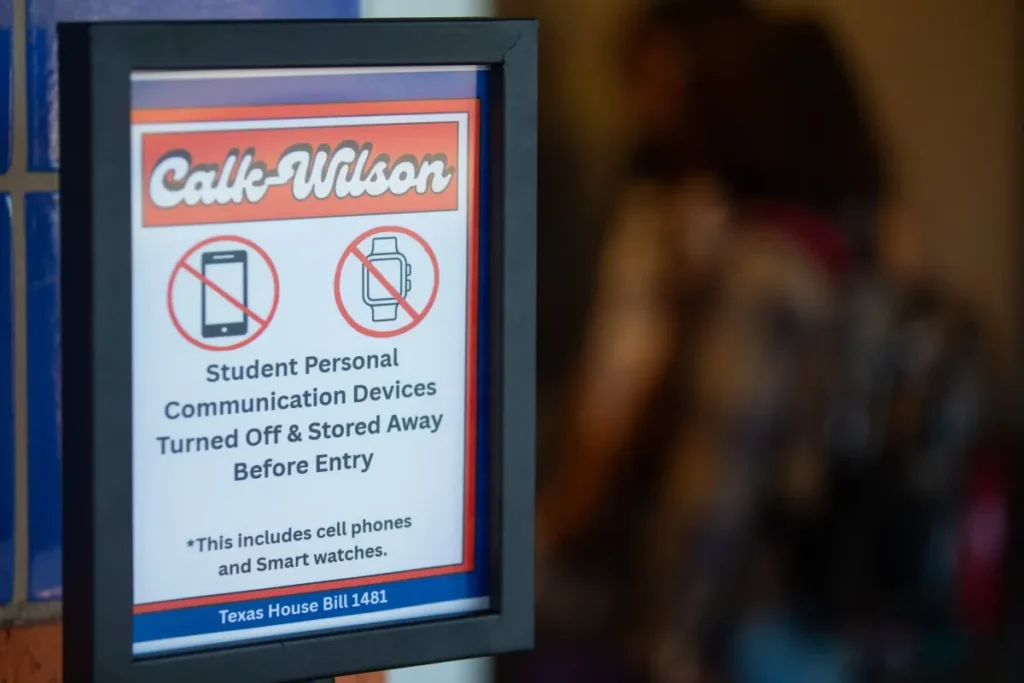
Governor Greg Abbott has signed a sweeping statewide law pulling smartphones, tablets, and smartwatches out of students’ hands from the first bell to the last and Texas classrooms will never quite look the same.
Walk into any Texas public school hallway this fall and you’ll notice something different. The glow of phone screens during lunch gone. The earbuds tucked under hoodies between classes gone. The under-the-desk scroll sessions during third period gone, at least in theory.
Texas Governor Greg Abbott has signed House Bill 1481 into law, requiring every public school district in the state to prohibit students from using personal communication devices while on school property during the school day. Hays CISD It’s one of the most sweeping education mandates Texas has passed in years and it lands at a moment when the national conversation about kids and screens has never been louder.
What the Law Actually Says
HB 1481 defines “personal communication devices” broadly cell phones, tablets, smartwatches, and any other device capable of telecommunication or digital communication are all covered. Devices provided to students by their district or charter school are exempt. Texas Education Agency
The law defines the school day as the period from the first bell to the last, including non-instructional times like lunch and passing periods. Austin County News Online That means there’s no sneaking a text in the cafeteria, no quick scroll during passing period. If students choose to bring a device to campus, it must be turned off and out of sight throughout the entire day. Ectorcountyisd
Violations won’t go unanswered. Device use will result in confiscation and disciplinary consequences, Austin County News Online though individual districts have flexibility in determining how strict those consequences are.
A $20 Million Push to Make It Stick
Passing a law is one thing. Enforcing it across hundreds of school districts from rural West Texas to the sprawling Houston metro is another challenge entirely. To help school systems comply, the Texas Education Agency has been allocated $20 million in state grant funding, intended to help districts purchase secure storage solutions and implement the infrastructure needed to enforce the ban. Texas Education Agency Think: locked pouches, storage lockers, wall-mounted cabinets outside classrooms.
School systems were required to have a written policy in place no later than September 18, 2025. Texas Education Agency Districts that dragged their feet aren’t just behind the curve they’re out of legal compliance.
Abbott Puts It in Plain Terms
The Governor didn’t mince words at the bill signing in Amarillo. “We have to make sure that during the few minutes we have in a class where children have the opportunity to learn a particular subject, that their full attention is devoted to that subject,” Abbott said. KBTX
It’s a sentiment that’s gained serious traction across party lines nationally. Concern over smartphone addiction in adolescents, surging anxiety rates among teenagers, and declining academic focus have pushed lawmakers in both red and blue states toward phone-free schools. With this law, Texas joins a growing list of Democrat- and Republican-led states that have enacted similar bans. Awayfortheday
How Districts Are Responding From San Antonio to Houston
The rollout looks different depending on where you are in the state. In San Antonio, districts like Alamo Heights ISD extended existing elementary and junior school phone policies to the high school level, responding to the new law by expanding what was already in place. KENS5
In the Houston area, Humble ISD’s School Board approved policies banning personal communication devices for the 2025–2026 school year, with the ban covering classrooms, locker rooms, cafeterias, hallways, passing periods, and restrooms. Humble ISD
South of Austin, Hays CISD began enforcing the ban on the first day of class for the 2025–2026 school year. Hays CISD No grace period. No warning week. Day one.
What About Emergencies?
This is where parents get loudest. If a lockdown happens if there’s a shooting, a fire, a medical emergency can a student reach their phone?
The law does carve out exceptions. Students with a documented medical need based on a directive from a qualified physician, or students with an Individualized Education Plan or Section 504 plan that includes assistive technology, will continue to receive appropriate accommodations. Ectorcountyisd For everyone else, the standard answer from districts is: call the school office.
Parents who need to reach their child during school hours can call the school office and leave a message to be delivered directly. Ectorcountyisd Old school literally.
Students React: “It’s Going to Be a Really Big Change”
Not everyone is cheering. Peyton Kosh, an incoming high school senior from College Station, told local news her classmates aren’t happy: “I’ve had my phone for the last three years of high school and now that I’m in my last year, it’s going to be a really big change not having my phone.” KBTX
That frustration is real and understandable. For many teens, the smartphone isn’t just a distraction; it’s how they manage anxiety, communicate with working parents, and feel safe. The transition will require schools to earn back trust as reliable points of contact in a crisis, not just enforce rules.
Public response to the ban has been mixed. Advocates believe it will help students concentrate, reduce classroom disruptions, and foster healthier learning environments. Critics worry about student safety in emergencies and question the broad wording of the law. Austin County News Online
The Bigger Picture
Texas isn’t acting in isolation. Across the country, researchers, pediatricians, and educators have spent the last several years building a case that smartphones especially social media are damaging adolescent mental health at scale. Jonathan Haidt’s widely discussed work on teen anxiety and screen time gave political cover to lawmakers who wanted to act but feared appearing out of touch.
Now, with one of the largest states in the nation going phone-free during school hours, the ripple effect on other state legislatures could be significant. If test scores climb, disciplinary incidents fall, or teacher satisfaction improves in Texas schools over the next two academic years, expect more states to follow.
For now, the pouches are on order, the policies are posted, and somewhere in a San Antonio cafeteria, a teenager is eating lunch without scrolling and maybe, just maybe, talking to the person sitting across from them.