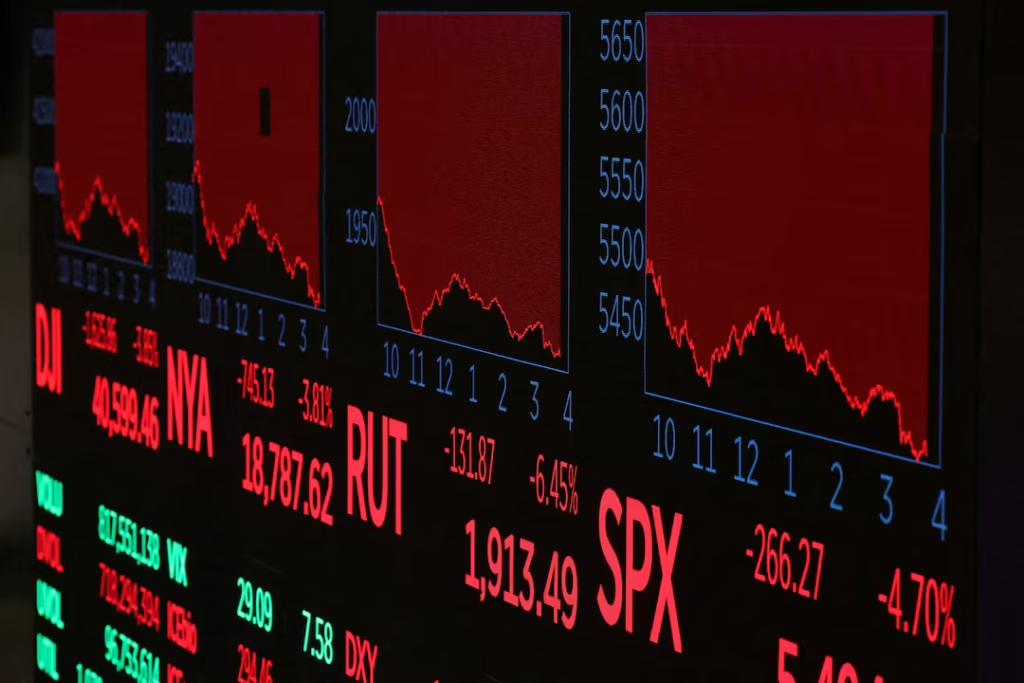
New economic signals trigger market reactions and nationwide concern
A fresh wave of economic data released within the last 24 hours has reignited a nationwide debate: is the U.S. economy slowing down faster than expected?
New indicators tied to consumer spending and manufacturing activity are showing signs of cooling, raising concerns among economists and policymakers. While the economy isn’t officially in recession territory, the latest numbers suggest momentum may be weakening just as Americans continue to grapple with high living costs.
The data drop quickly went viral across financial media and social platforms, with analysts warning that the Federal Reserve may face increasing pressure to adjust its strategy. For everyday Americans, the concern is simpler: will prices keep rising, and will jobs remain stable?
President Joe Biden responded by emphasizing resilience in the labor market, pointing to steady job growth and wage gains. However, critics argue that underlying weaknesses especially in manufacturing and small business activity are being overlooked.
Key Updates:
- New economic data shows slowdown in consumer spending growth
- Manufacturing sector reports weaker-than-expected activity
- Market volatility increases as investors react to uncertainty
- Federal Reserve policy expectations shift amid new signals
Background:
Over the past year, the U.S. economy has walked a tightrope between growth and slowdown. Aggressive interest rate hikes by the Federal Reserve were designed to curb inflation but they also made borrowing more expensive for businesses and consumers.
Now, those policies may be starting to take a visible toll. Industries that rely heavily on financing, including housing and manufacturing, are among the first to show signs of strain.
At the same time, inflation remains a key issue. While it has cooled compared to previous highs, prices for essentials like groceries, rent, and healthcare are still significantly elevated compared to pre-pandemic levels.
Reactions and Impact:
Financial markets reacted quickly to the latest developments. Stocks showed increased volatility, while bond yields fluctuated as investors reassessed future interest rate moves.
On social media, the conversation exploded especially on platforms like X where users debated whether a recession is inevitable or avoidable. Hashtags related to inflation, layoffs, and economic anxiety began trending within hours of the data release.
Business leaders are also weighing in. Some CEOs have signaled caution, hinting at potential hiring slowdowns if conditions worsen. Others remain optimistic, arguing that the economy is simply normalizing after years of rapid growth.
State-Level Angle:
The impact of the economic shift is already being felt differently across states.
In California, where tech and housing dominate, higher interest rates are cooling real estate activity and startup funding. Meanwhile, Texas continues to show relative strength in energy and job growth, though concerns are rising in manufacturing hubs.
For swing states heading into the next election cycle, economic perception could become a decisive factor making this latest data politically as well as financially significant.
In Midwest states like Ohio and Michigan, factory slowdowns are drawing attention, particularly in the automotive supply chain. These regions are often early indicators of broader economic trends.
Conclusion:
While the U.S. economy is not officially in recession, the latest 24-hour developments have intensified scrutiny and uncertainty. With markets reacting, policymakers under pressure, and voters paying close attention, the coming weeks could prove critical.
Whether this is a temporary slowdown or the start of something more serious remains to be seen but one thing is clear: the economic story is once again at the center of America’s national conversation.