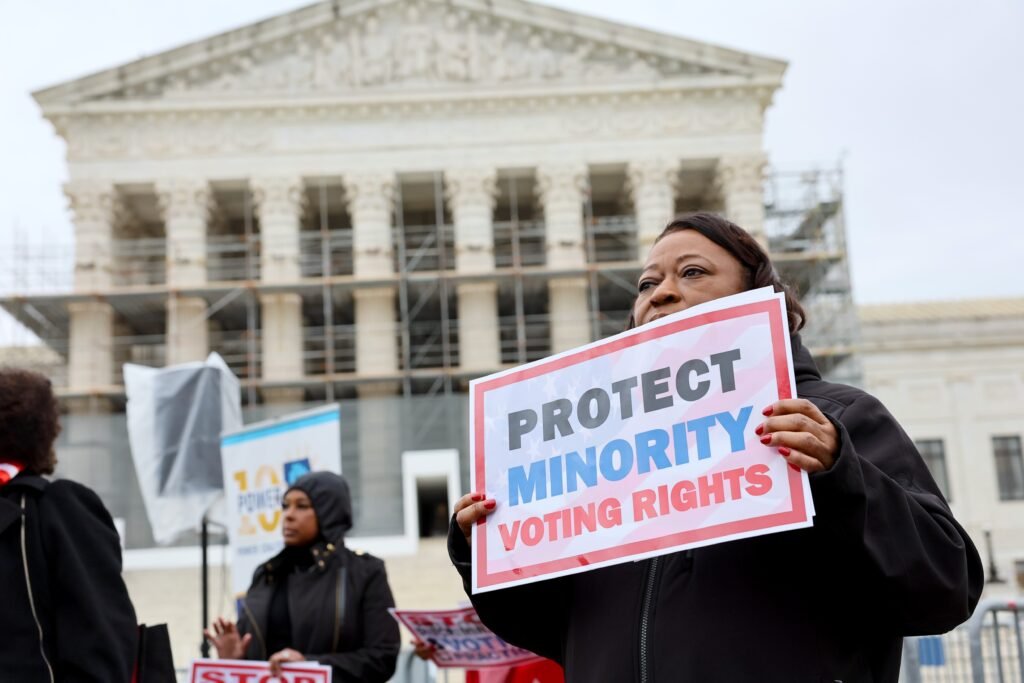
The U.S. Supreme Court won’t — at least not yet — take up a legal fight that could gut what’s left of the Voting Rights Act’s enforcement power.
NPR reported Sunday, May 18, 2026, that the court sidestepped a case raising the question of whether private individuals and civil rights groups can sue to enforce the landmark law’s remaining protections for minority voters. That’s a question with teeth. If the court had taken the case and ruled against private enforcement, it would’ve stripped away one of the primary tools used to challenge discriminatory voting practices across the country.
Recent weakening
The decision to pass on the case comes after the Supreme Court already chipped away at the Voting Rights Act in recent terms. Those rulings narrowed the law’s scope and made it harder to bring successful claims under its provisions — a pattern that’s drawn sharp criticism from voting rights advocates.
Private lawsuits have historically been the engine behind Voting Rights Act enforcement. The federal government can bring its own cases, but it doesn’t always. Civil rights organizations and individual voters have filled that gap for decades, filing challenges to redistricting maps, voter ID laws, and polling place closures they argue discriminate against minority communities.
The unresolved question
Here’s the catch. The court didn’t rule on the merits. It just didn’t take the case. That means the underlying legal question — whether a private right of action exists under the Voting Rights Act — remains unresolved at the highest level. Lower courts are split on the issue, and the Supreme Court could pick it up in a future term.
For Georgia, where Voting Rights Act litigation has shaped redistricting battles and election administration disputes for years, the question isn’t academic. A ruling against private enforcement would dramatically reduce the number of lawsuits that can be brought to challenge voting rules in the state.
The court’s decision to avoid the issue doesn’t settle anything. It delays the fight. The same legal question will almost certainly land back on the justices’ docket — the only unknown is when.
NPR reported this story on May 18, 2026. Read the original report.