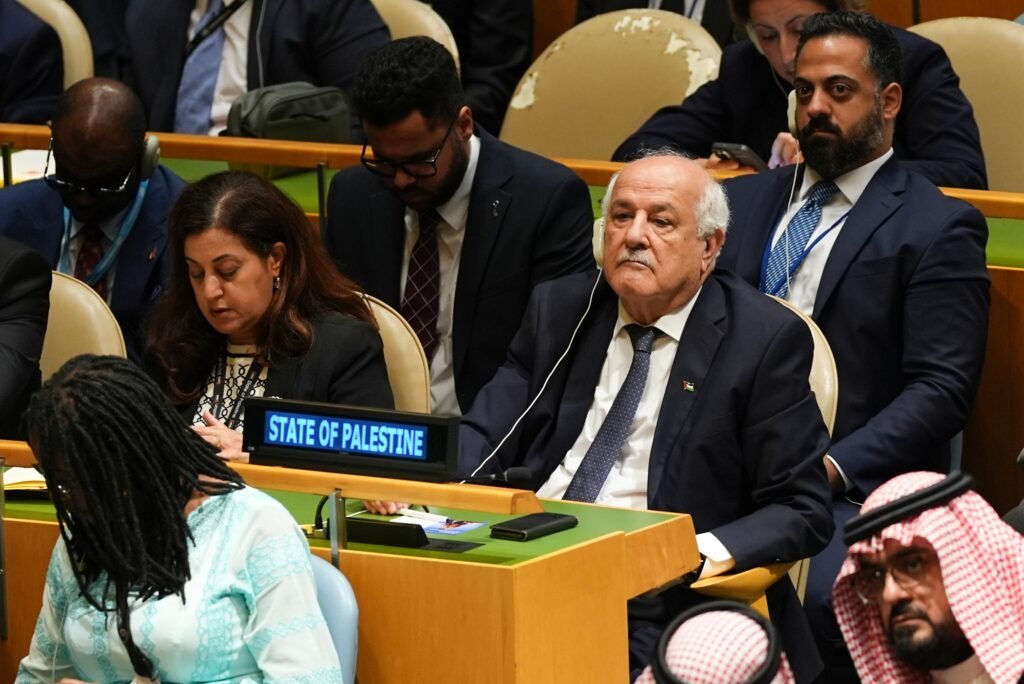
The Palestinian delegation has held observer status at the United Nations for decades, a position that’s allowed its representatives to participate in General Assembly proceedings without a full member-state vote. That status — and the diplomatic access it provides — has long been a point of friction between the delegation, the U.S., and Israel.
The withdrawal
On Wednesday, May 21, 2026, the Palestinian delegation to the U.N. formally dropped its bid to secure a senior position within the international body. The move came after the United States threatened to revoke visas held by members of the delegation.
It isn’t clear which specific U.N. role the Palestinians had been pursuing. NPR didn’t identify the exact position.
What is clear: the U.S. wielded its authority over visa access — a lever Washington can pull because the U.N. headquarters sits in New York — to force the delegation’s hand. Without valid visas, Palestinian diplomats wouldn’t be able to remain in the country to carry out their work at U.N. headquarters.
The threat itself carries weight beyond this single appointment. Revoking diplomatic visas would effectively sideline the entire Palestinian delegation from day-to-day operations at the General Assembly, not just block one official from one job.
No public statement from the Palestinian delegation explaining the withdrawal in detail has been reported. The U.S. government hasn’t publicly outlined its reasoning for the pressure campaign, either.
Whether the Palestinians will attempt a similar bid in the future — or whether the U.S. visa threat extends beyond this dispute — remains an open question.
NPR reported this story on May 21, 2026. Read the original report.