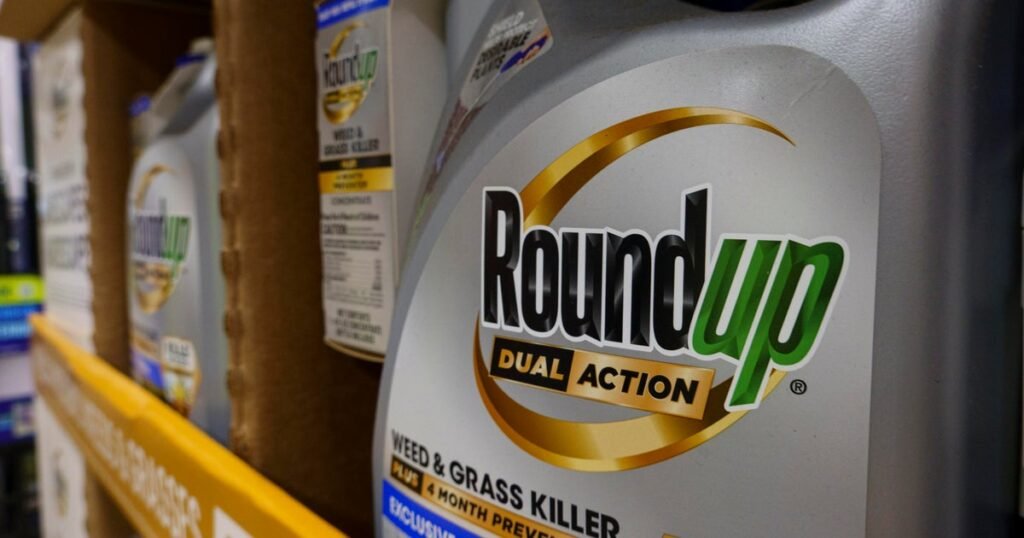
The Supreme Court handed Monsanto a win Wednesday, ruling the company can’t be held liable under state laws for not warning consumers that its Roundup weedkiller may cause cancer.
The decision shuts down a major avenue of litigation that plaintiffs across the country had used to pursue Monsanto in state courts — arguing the company should have printed cancer-risk warnings on Roundup’s label. The court said those claims don’t hold up against federal law governing pesticide labeling.
Gone. At least through state courts.
Roundup’s active ingredient, glyphosate, has been at the center of a long-running legal fight. The International Agency for Research on Cancer classified glyphosate as a probable human carcinogen in 2015. Monsanto — now owned by Bayer — has disputed that finding for years, pointing to EPA determinations that glyphosate is not likely to cause cancer when used as directed.
The tension between those two assessments is exactly what’s driven thousands of lawsuits. Farmers, landscapers, and home gardeners who developed non-Hodgkin’s lymphoma after regular Roundup use sued the company, arguing they were never told of the risk. State juries had sided with plaintiffs before — including a 2018 case that produced an $80 million verdict against Monsanto, later reduced on appeal.
Wednesday’s ruling doesn’t erase those prior verdicts. But it does foreclose the state-law failure-to-warn theory going forward, which was the backbone of most pending cases.
What remains unclear is how many active lawsuits this knocks out entirely versus how many plaintiffs might still have viable claims under different legal theories. Bayer, which acquired Monsanto in 2018 for roughly $63 billion, has spent years trying to put Roundup litigation behind it — setting aside billions in settlement funds while the legal exposure kept climbing. The company has not yet said publicly how it expects Wednesday’s decision to affect remaining claims or its litigation reserve.