
The landscape of us daily news consumption has undergone dramatic transformation over the past decade. Americans now access information through an unprecedented variety of channels, from traditional broadcast networks to social media platforms, mobile apps, and hyper-local digital publishers. Understanding how people consume news today, what sources they trust, and how to navigate this complex ecosystem has become essential for anyone wanting to stay informed about national and local events. The evolution of us daily news reflects broader changes in technology, media economics, and audience behavior that continue to shape how information flows through American society.
The Current State of US Daily News Consumption
The way Americans engage with us daily news has shifted dramatically in recent years. According to news consumption research from the American Press Institute, people now rely on multiple sources throughout their day, checking updates during morning routines, lunch breaks, and evening downtime. This fragmented consumption pattern has replaced the traditional model where families gathered around televisions for evening broadcasts or read morning newspapers over breakfast.
Multiple Platform Reality
Today’s news consumer typically uses three to five different platforms daily. Research shows that broadcast and cable remain top sources for US news consumption, particularly for breaking national stories and major events. However, digital platforms have carved out substantial market share, especially among younger demographics who prefer on-demand access to information.
The multi-platform approach means most Americans now encounter us daily news in various formats:
- Morning mobile checks for overnight developments and weather updates
- Social media scrolling during commutes and breaks
- Podcast listening during exercise or household tasks
- Evening television for in-depth coverage and analysis
- Weekend reading of longer investigative pieces

Trust and Credibility Challenges
The abundance of us daily news sources has created both opportunities and challenges for audiences. With information available from countless publishers, discerning credible sources from questionable ones requires active effort. Many Americans report feeling overwhelmed by the volume of news while simultaneously worrying about misinformation.
Building media literacy has become essential in 2026. Readers who understand how to verify sources, cross-reference stories, and identify bias tend to feel more confident in their news consumption. This skill set proves particularly valuable when following developing stories where initial reports may contain incomplete or inaccurate information.
Local Versus National News Dynamics
The relationship between local and national us daily news has evolved significantly. While major networks and digital platforms dominate national conversation, communities increasingly recognize the value of state-specific and regional coverage. Local news provides context that national outlets cannot match, covering issues like municipal elections, school board decisions, and regional business developments that directly impact residents’ daily lives.
Why Local Coverage Matters
State-focused news platforms have grown in importance as traditional local newspapers have declined. When following health news specific to your state, readers find information about regional healthcare policies, disease outbreaks in their area, and updates about local medical facilities that national sources rarely cover in depth.
The value of localized us daily news extends across multiple categories:
- Political coverage tailored to state legislatures and governor actions
- Economic reporting on regional employment and business trends
- Education news about school systems and university developments
- Infrastructure updates regarding roads, utilities, and public projects
- Community events and human interest stories
| News Type | National Coverage | Local Coverage |
|---|---|---|
| Political Depth | Federal policies, Congress, White House | State legislature, city councils, local elections |
| Economic Focus | Stock markets, national employment | Regional job markets, local businesses |
| Relevance | Broad trends | Direct community impact |
| Update Frequency | Multiple times hourly | Daily to weekly depending on market size |
The Information Gap
Many communities experience a significant gap in us daily news coverage. As legacy newspapers have downsized or closed, fewer journalists cover state capitals, county governments, and municipal affairs. This gap creates opportunities for digital-native publishers to serve underserved markets with targeted, relevant content that addresses specific regional needs.
Social Media’s Role in News Distribution
The intersection of social media and us daily news has fundamentally altered information flow. Research on social media and news consumption reveals that substantial portions of Americans encounter news through platforms like Facebook, Twitter, and increasingly, newer services. This distribution model has advantages and drawbacks that news consumers should understand.
Algorithmic Curation Impact
Social platforms use complex algorithms to determine which us daily news stories appear in user feeds. These systems prioritize content based on engagement metrics, user preferences, and platform-specific goals. While this personalization can surface relevant stories, it also raises concerns about filter bubbles and echo chambers where users primarily see perspectives that reinforce existing beliefs.
Understanding how algorithms shape news exposure helps readers take control of their information diet:
- Actively seek diverse sources rather than relying solely on algorithmic feeds
- Follow reporters and outlets directly for comprehensive coverage
- Use bookmarks and lists to organize trusted sources
- Set notifications for breaking news from reliable publishers
- Verify viral stories before sharing to combat misinformation
Viral News Phenomena
The speed at which stories spread on social media has transformed us daily news cycles. A local incident can gain national attention within hours if it resonates with broader concerns or generates strong emotional responses. This viral dynamic creates pressure on news organizations to publish quickly, sometimes before all facts are verified, which can lead to corrections and updates as stories develop.
Digital-First News Strategies
Modern us daily news consumption requires intentional strategies to stay informed without becoming overwhelmed. The 24/7 news cycle and constant notifications can lead to fatigue and anxiety. Developing healthy news habits helps readers remain engaged citizens while maintaining mental well-being.
Curating Your News Diet
Successful news consumers in 2026 treat information gathering as a skill requiring active management. Rather than passively accepting whatever appears in feeds, they construct deliberate systems for staying informed.
Morning routine approach:
- Check trusted sources for overnight major developments
- Review state-specific updates for local relevance
- Scan headlines across political spectrum for balanced perspective
- Deep-read one or two significant stories
Scheduled check-ins:
- Limit news consumption to specific times rather than continuous monitoring
- Use aggregation apps that compile stories from multiple sources
- Subscribe to evening newsletters for daily summaries
- Dedicate weekend time for longer investigative pieces
Managing Information Overload
The volume of available us daily news can overwhelm even dedicated readers. Filtering strategies help focus attention on genuinely important developments while avoiding repetitive coverage of the same events.
| Strategy | Benefit | Implementation |
|---|---|---|
| Source limitation | Reduces redundancy | Select 3-5 primary sources covering different beats |
| Topic focus | Increases relevance | Prioritize subjects that impact your life and community |
| Format variety | Enhances understanding | Mix written articles, podcasts, and video content |
| Scheduled breaks | Prevents fatigue | Designate news-free periods daily |
The Mobile News Experience
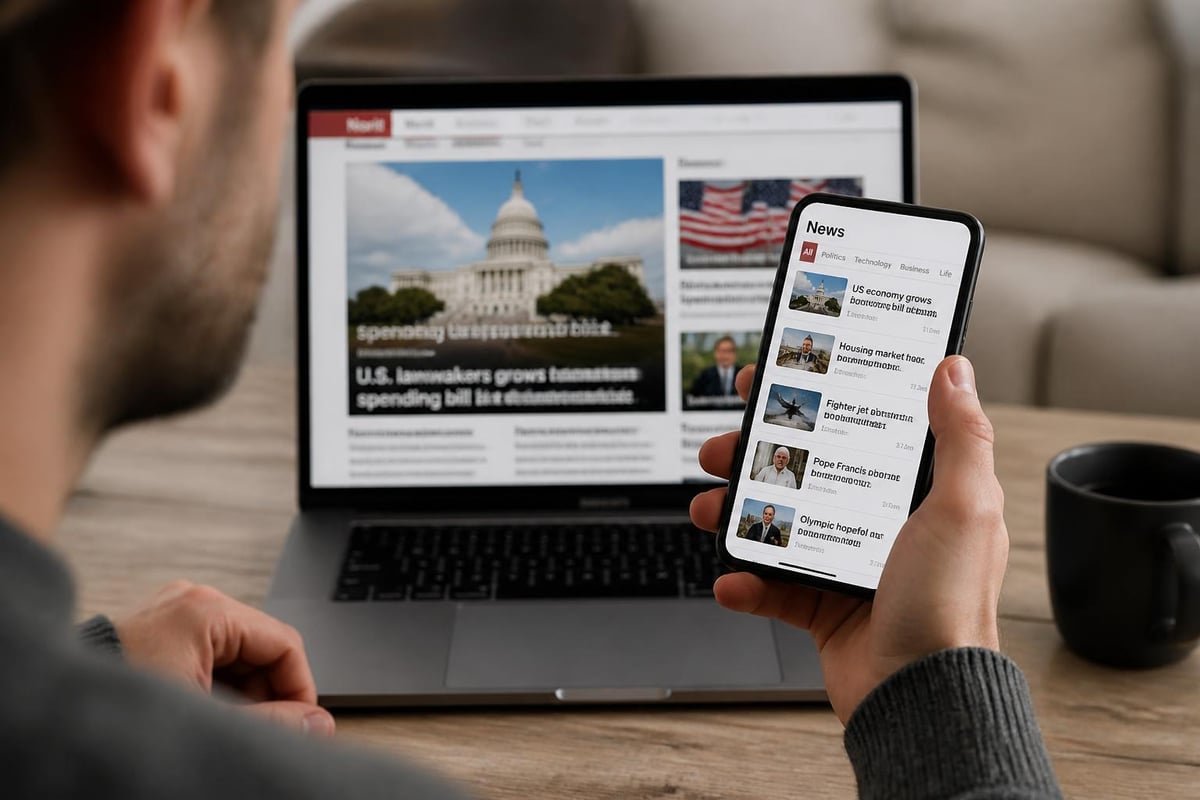
Smartphones have become the primary device for us daily news consumption for many Americans. Mobile-optimized sites and dedicated apps provide instant access to breaking developments, but the small screen format influences how stories are written, presented, and consumed.
App-Based News Delivery
News applications offer customization options that browser-based reading cannot match. Push notifications alert users to breaking stories, while saved preferences surface relevant topics automatically. For those tracking politics across different states, specialized apps can filter content by location and subject matter.
The mobile us daily news experience emphasizes:
- Speed over depth in initial reports
- Visual elements like photos and infographics
- Short paragraphs optimized for small screens
- Quick updates as stories develop
- Easy sharing to social networks
Location-Based Relevance
GPS capabilities enable news apps to prioritize geographically relevant stories. A user in Texas sees different us daily news than someone in Maine, even when using the same app. This localization improves relevance but can also narrow perspective if users don’t actively seek national and international context.
Quality Journalism in the Digital Age
Understanding what constitutes credible us daily news helps readers navigate the complex media landscape. Professional journalism follows established standards for accuracy, fairness, and transparency that distinguish it from opinion content, advocacy, and misinformation.
Identifying Reliable Sources
Quality news organizations maintain clear separation between news reporting and opinion sections. They publish corrections when errors occur, cite sources for factual claims, and provide context that helps readers understand complex issues. When evaluating a us daily news source, consider these markers of credibility:
- Transparent ownership and funding disclosed on the website
- Clear bylines identifying reporters and their expertise
- Multiple sources cited for significant claims
- Correction policies prominently displayed and followed
- Contact information for reaching editors and reporters
Supporting Local Journalism
The economics of us daily news have changed dramatically as advertising revenue has migrated to digital platforms. Many quality news organizations now rely on reader support through subscriptions, memberships, or donations. Communities that invest in local journalism benefit from accountability reporting that monitors government, exposes wrongdoing, and provides civic information.
| Revenue Model | Advantages | Considerations |
|---|---|---|
| Subscriptions | Sustainable funding, reader loyalty | Paywall limits broad access |
| Advertising | Free access for readers | Potential conflicts of interest |
| Philanthropy | Editorial independence | Sustainability questions |
| Mixed model | Diversified revenue streams | Complex to manage |
Navigating Breaking News Coverage
Breaking us daily news events require special consideration. Initial reports during developing situations often contain incomplete or inaccurate information as journalists work to verify facts amid rapidly changing circumstances. Savvy news consumers understand this dynamic and adjust their expectations accordingly.
The Update Cycle
Major breaking stories evolve through predictable phases. Early reports establish that something significant has occurred but may lack details. Subsequent updates add context, official responses, and eyewitness accounts. Later coverage provides analysis, implications, and broader context. Understanding this progression helps readers evaluate the certainty level of different claims.
Early phase (first 1-2 hours):
- Basic facts about what happened and where
- Initial casualty or impact estimates (often revised later)
- Limited verified information from official sources
Developing phase (2-12 hours):
- Additional details and context emerge
- Expert analysis and historical comparisons
- Official statements and press conferences
- Corrections to initial misreported facts
Sustained coverage (12+ hours):
- In-depth investigation of causes and implications
- Human interest stories and individual impacts
- Political and policy responses
- Long-term consequences and next steps
State-Specific News Advantages
Platforms focused on state-level us daily news provide unique value that national outlets cannot replicate. By concentrating resources on specific geographic areas, these publishers develop deep expertise in local issues, relationships with regional sources, and understanding of community concerns that shape coverage priorities.
Comprehensive State Coverage
Rather than treating states as monolithic entities, quality regional news recognizes internal diversity. Urban centers have different concerns than rural areas. Coastal communities face distinct challenges from interior regions. Effective state-focused coverage acknowledges these variations while identifying common threads that affect all residents.
Readers benefit from exploring state-by-state news resources that provide:
- Legislative tracking of bills and policies specific to their state
- Economic analysis of regional industries and employment trends
- Environmental reporting on local climate impacts and natural resources
- Education coverage of state university systems and K-12 policies
- Infrastructure updates about transportation and utility projects
Community Connection
State-focused us daily news fosters connection between residents and their communities. Stories highlighting local innovations, profiling regional leaders, and celebrating community achievements create shared identity and civic pride. This positive coverage balances the necessary scrutiny of government and institutions that investigative journalism provides.
The Future of News Consumption
As technology continues evolving, us daily news consumption will adapt to new platforms and formats. Artificial intelligence, virtual reality, and personalized delivery systems promise to transform how people access information. However, fundamental journalistic principles of accuracy, fairness, and public service remain constant regardless of delivery mechanism.
Emerging Trends
Several developments are shaping the future of us daily news:
- Audio journalism growth through podcasts and smart speaker briefings
- Newsletter renaissance with direct-to-inbox content from individual reporters
- Collaborative journalism where multiple outlets pool resources for major investigations
- Blockchain verification for proving content authenticity and source
- AI-assisted reporting for data analysis and routine coverage
Reader Empowerment
The abundance of news sources empowers readers to construct personalized information ecosystems that serve their specific needs. Rather than depending on a single gatekeeper to determine what constitutes important news, individuals can combine national coverage, state-specific reporting, and specialized niche sources to create comprehensive awareness of issues that matter to them.
This empowerment carries responsibility. Effective citizenship in a democracy requires informed participation. By developing strong news consumption habits, utilizing reliable sources, and maintaining critical thinking about information quality, Americans can navigate the complex us daily news landscape successfully.
Staying informed about both national developments and local happenings requires intentional strategy and reliable sources. Understanding how us daily news has evolved and implementing smart consumption habits helps you remain engaged without becoming overwhelmed. Whether you’re interested in politics, health, technology, or community events, State Wise News provides the state-specific coverage you need to stay connected to what’s happening in your area. Start exploring tailored news for your state today and experience the difference that locally-focused reporting makes.