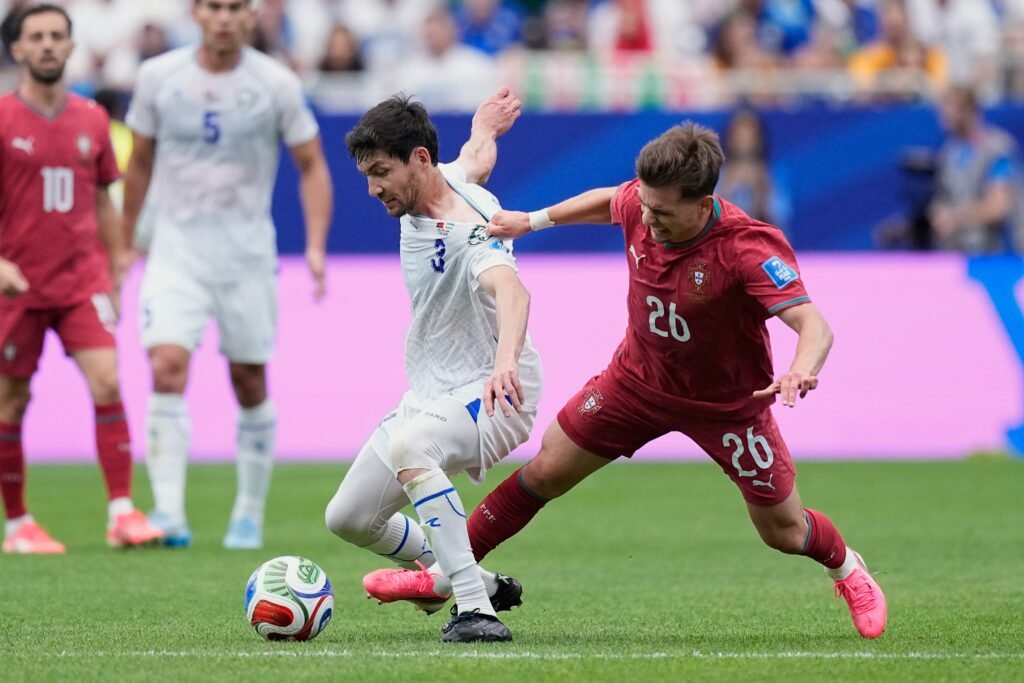
They came to the World Cup carrying a flag no Central Asian country had ever carried there before. Uzbekistan made its tournament debut this summer — the first nation from that region to qualify — and its fans didn’t treat the moment quietly.
Uzbek supporters have used the stage to showcase their country and its culture, filling stands and public spaces with color, food, music, and national pride that most soccer fans had never encountered before. It’s the kind of debut that draws attention beyond the scoreboard.
Uzbekistan’s president framed the team’s run as something larger than a sporting achievement. The squad, he said, is a symbol of the “new Uzbekistan” — a phrase that carries political weight in a country that has spent years pushing an image of reform and openness after decades of post-Soviet isolation.
Background
Central Asia — home to Uzbekistan, Kazakhstan, Kyrgyzstan, Tajikistan, and Turkmenistan — has long sat outside the World Cup’s orbit. The region’s national teams have historically struggled to advance through Asia’s qualifying rounds, which pit them against football powers like Japan, South Korea, and Australia. Uzbekistan broke through that pattern and earned a spot in a 48-team field that expanded the tournament’s reach.
The nation has a population of roughly 36 million and a football culture that, by the account of its own fans, has been building toward this moment for years. Those fans say the qualification didn’t just matter at home — it mattered to the broader Central Asian diaspora watching from abroad.
Whether the team advances past the group stage remains unresolved. But Uzbekistan’s presence at the tournament has already drawn notice — not just for what happens on the pitch, but for the visibility it hands a country that doesn’t often command global attention. The president’s framing of the squad as a national symbol suggests Tashkent intends to make the most of that window, however long it lasts.
No further matches or group-stage results were immediately available.